
Understand LLMs — From Training to Everyday Tools
What large language models do
A large language model, or LLM, learns patterns from huge collections of text. It uses those patterns to predict what piece of text should come next. That basic process helps explain how an LLM works, from answering questions to drafting code.
An LLM does not read with human understanding or store a neat copy of every book. Instead, it turns text into smaller units called tokens, then learns links between those units. A token may be a whole word, part of a word, punctuation, or a space.
When you send a prompt, the model turns it into tokens and works through them in order. It uses the prompt and earlier text to estimate likely next tokens. It then repeats that step until it forms an answer or reaches a limit.
- Training teaches patterns from examples.
- Tokens give the model units to process.
- Next-token prediction lets it form longer replies.
How LLMs learn from text
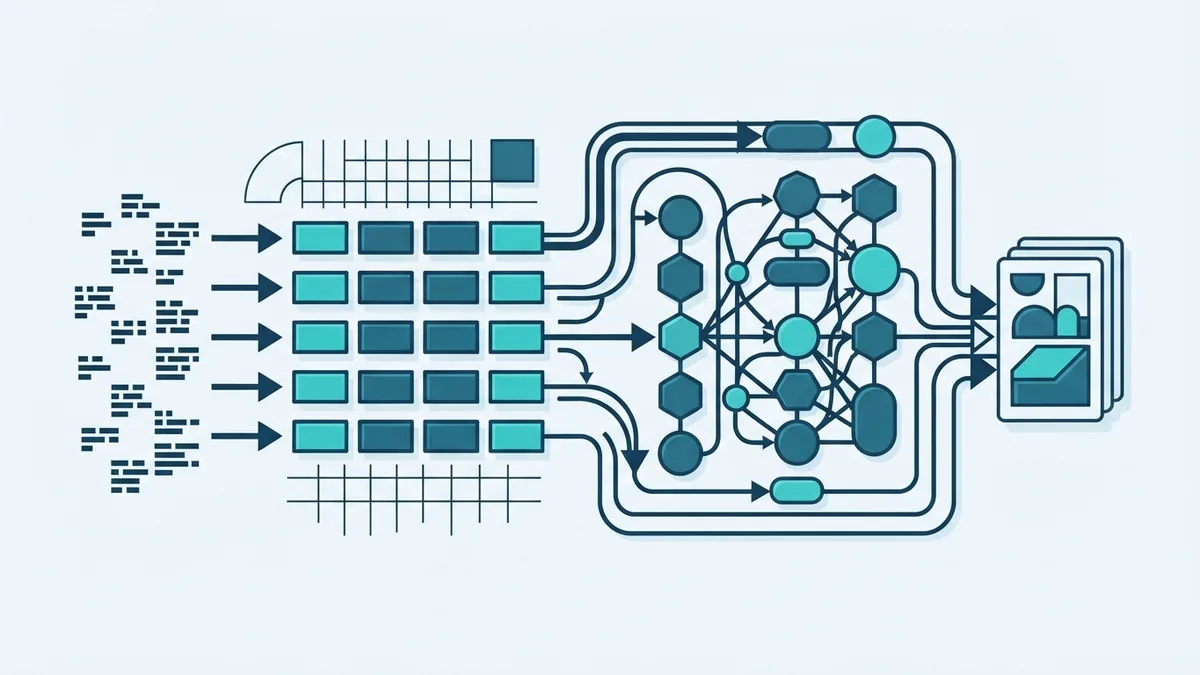
Training starts with a large set of text from sources such as books, web pages, and code. Some leading models have trained on billions of words or more. The exact size and mix depend on the model maker.
First, the training system breaks text into tokens. It hides or shifts part of a sample, then asks the model to predict what comes next. If the guess differs from the source, the system adjusts the model's internal values.
This cycle runs many times across many examples. Over time, the model gets better at common word order, facts found in its training data, and links between ideas. It can still miss facts, since learning patterns is not the same as checking truth.
After this broad stage, a maker may tune the model for a narrower task. Fine-tuning uses chosen examples to shape how the model handles a field, such as support or software work. Human feedback may also help shape safer or more useful replies.
Neural networks turn patterns into predictions
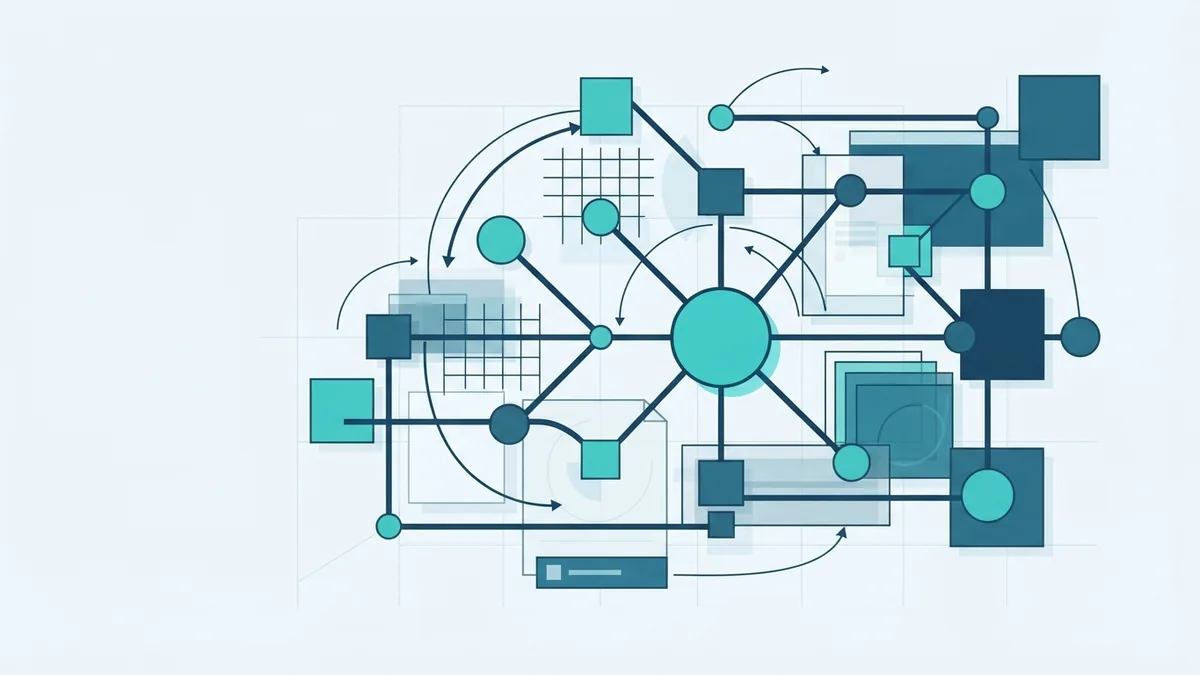
Most LLMs use deep neural networks. These are layers of simple math steps linked together. Each layer changes the input in a way that can help the next layer spot patterns.
At the start, each token becomes a set of numbers called an embedding. These numbers place tokens in a shared space, where related uses can sit near each other. The model then passes the numbers through many layers.
During training, the network adjusts billions of learned values, often called weights. These values affect how strongly one pattern shapes another. At answer time, the model uses them to score possible next tokens.
That is why an LLM can produce fluent text without having human thoughts. It applies learned patterns to the current input and ranks possible continuations. The result can seem like reasoning, but it may fail when a task needs reliable facts or careful checking.
How attention helps a model follow context
A word can mean different things in different sentences. In “The bank raised its rates,” bank likely means a financial firm. In “They sat by the bank,” it likely means a river edge.
Attention helps a model weigh which other tokens matter for each token. It can link “bank” with nearby clues such as “rates” or “river.” This gives the model a stronger sense of context than treating each word alone.
Attention can also connect words that sit far apart in a passage. In “Maya left her coat at work because she felt warm,” the model can link “she” with Maya. Such links help it keep track of names, topics, and earlier details.
Attention does not guarantee that every link is right. Long prompts can contain many competing details, and the model may overlook a key point. Clear prompts and well-ordered facts can help reduce that risk.
Why transformers power many LLMs
The transformer is a neural network design built around attention. Unlike older designs that read only one word at a time, it can compare many tokens in a passage at once. That helps it learn links across a sentence or longer text.
The original transformer paper described this approach for language tasks. Its authors showed how attention could replace repeated steps used by earlier models. See the original transformer research paper for the design.
Many transformers use blocks that repeat attention and other math steps. Each block updates the model's view of the tokens. With enough layers, it can build richer links between words and ideas.
Transformers also support training across many computers at once. That can speed up work on large text sets. Still, training needs substantial computing power, energy, and careful data choices.
What LLMs can do in real work
LLMs can draft, shorten, classify, and explain text. They can translate between languages, answer common support questions, and help staff search long documents. A business can tune a model with domain examples, then set rules for when it should hand a case to a person.
They can also assist with code. A user may describe a small task, and the model can suggest a function or explain an error. So, how does an LLM generate code? It predicts code tokens from the prompt and patterns learned from code examples.
For payment and web teams, this may help draft test cases or explain an API response. A developer should still review the result, run tests, and check security risks. Generated code can be wrong or unsafe.
Models can also make things up. This is known as hallucination: an answer sounds sure but contains false claims. The NIST AI Risk Management Framework offers a useful way to think about AI risks and checks.
What may change next
Newer models may handle longer prompts, more kinds of input, and more focused tasks. Better tuning may also help them follow a team's terms and work steps. These gains depend on the quality of data and the care taken during testing.
Some tools let a model call other software to fetch data or take an action. In those setups, the model needs clear rules about which tool fits the task. A model should not choose a tool just because its name sounds related.
Teams should test models with real tasks before they rely on them. Check factual accuracy, data privacy, response time, and cost. Keep a human review step for high-risk choices, and track errors after release.
The core idea remains simple: an LLM learns patterns, then predicts likely text. Its strengths can save time on language-heavy work. Its limits make testing and oversight part of the design.