
Agile Software Development: Principles, Frameworks, and Benefits
What Is Agile Software Development?
Agile software development is a way to build software in small, useful steps. Teams plan, build, test, and review work in short cycles. They then use feedback to guide the next cycle.
The agile software development methodology values change rather than resisting it. A team may change its plan when user needs, market aims, or technical facts change. This makes the product more likely to solve the right problem.
People often ask, “What is software development methodology?” It is the set of methods a team uses to plan, build, test, and ship software. Agile is one such method. It focuses on learning through regular delivery.
Agile does not mean working without a plan. Teams still set goals, track risks, and agree on scope. The main difference lies in how they treat plans. An agile plan can change when new facts appear.
- Work is split into small tasks or user stories.
- Teams ship useful pieces at regular points.
- Users and stakeholders review progress often.
- Teams improve their process after each cycle.

The Core Principles Behind Agile
The Agile Manifesto sets out four key values. It values individuals and interactions over processes and tools. It values working software over broad documents. It also values customer collaboration over contract talks.
The fourth value is responding to change over following a fixed plan. These values do not reject tools, documents, contracts, or plans. They give people and useful results greater weight when trade-offs arise.
Agile teams also follow twelve principles. They aim to satisfy customers through early and steady delivery. They welcome changed needs, even late in a project. They treat working software as the main sign of progress.
Close contact matters too. Developers, business staff, users, and other stakeholders work together throughout the development cycle. Cross-functional teams bring the skills needed to design, build, test, and release a feature.
Sprints make this approach easy to see. A sprint is a fixed work period, often lasting one or two weeks. The team checks product growth at the end of each sprint. It can then adjust its next goal.
| Agile value | What it means in practice |
|---|---|
| People and teamwork | Talk through issues instead of hiding behind process. |
| Working software | Show a tested feature instead of only a plan. |
| Customer collaboration | Invite users to review work and shape priorities. |
| Response to change | Update the plan when evidence changes. |
Agile Frameworks Explained
Agile is a broad approach, not one fixed workflow. Several frameworks turn its values into daily practices. Scrum, Kanban, Extreme Programming, and Lean are the most common examples.
Scrum
Scrum uses short sprints and a ranked product backlog. A product owner sets priority. A scrum master helps the team remove blocks. Developers choose work and deliver a usable increment.
Teams hold planning, daily sync, review, and retrospective meetings. These events create a steady loop of work and feedback. Scrum suits teams that need a clear rhythm and regular checks.
Kanban
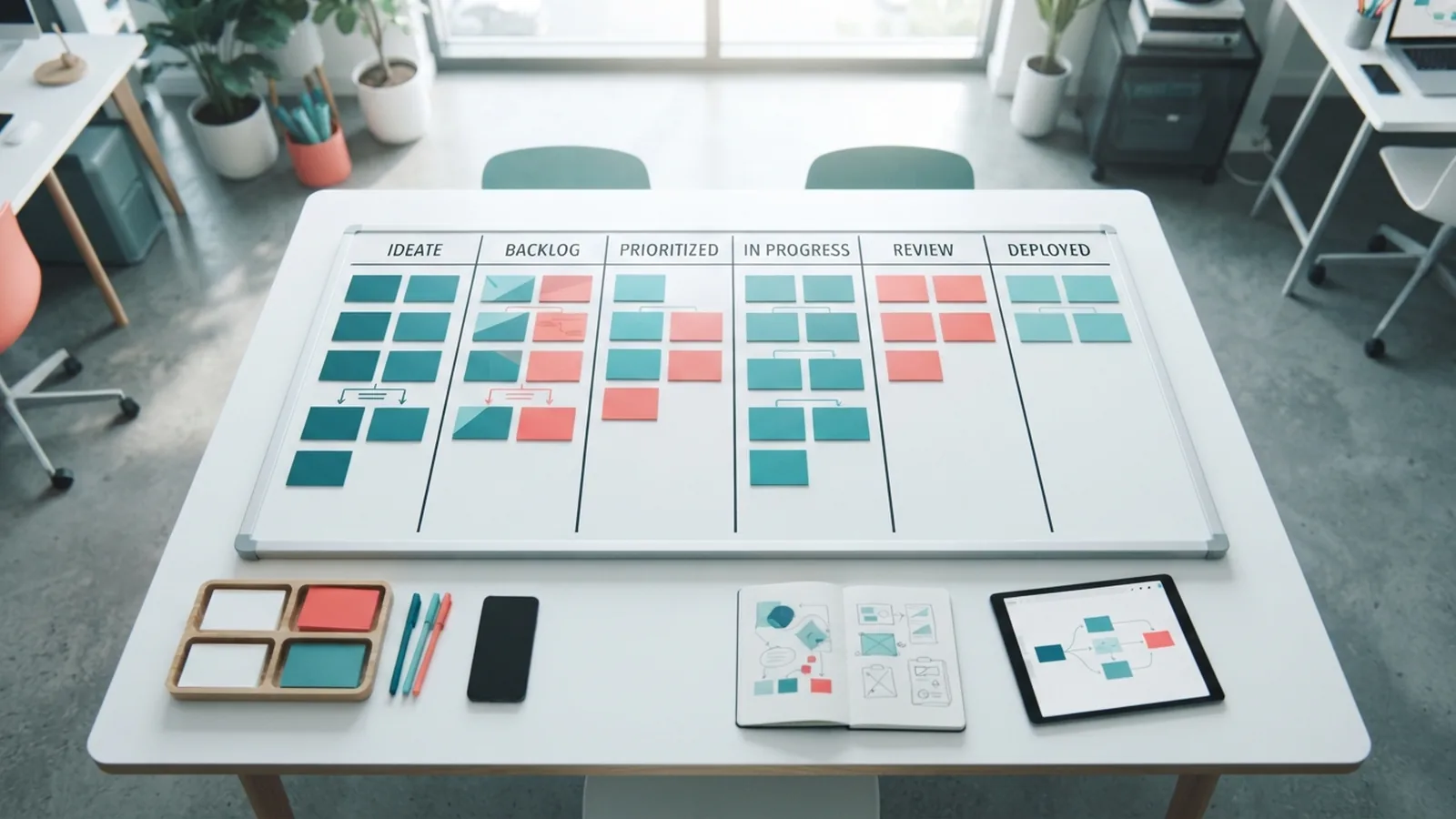
Kanban shows work on a visual board. Cards move through stages such as ready, active, review, and done. Teams set limits on active work. This helps prevent too many tasks from starting at once.
Kanban does not require fixed sprints. Teams release work when it is ready. It suits support teams, platform work, and products with changing demand.
Extreme Programming and Lean
Extreme Programming, or XP, places strong focus on code quality. It uses pair work, test-first coding, small releases, and close customer input. These habits help teams find defects early.
Lean software work aims to cut waste and speed up learning. It limits delays, handoffs, and features that users may not need. Many teams blend Lean ideas with Scrum or Kanban.
Scrum introduced the sprint as a core work cycle. That makes Scrum the answer when someone asks which agile method introduced sprints. Yet other frameworks can use short cycles too.
- Choose Scrum for a planned sprint rhythm.
- Choose Kanban for a steady flow of changing work.
- Choose XP for strong engineering and test habits.
- Choose Lean to cut waste and improve flow.

Why Teams Use the Agile Methodology
Agile can lower the risk of building the wrong product. Users see early versions and can correct the direction. The team learns before it spends months on a large release.
Small releases also make defects easier to trace. A team can link a fault to recent work. It can then fix the issue before more code depends on it. Quality improves when testing runs throughout the cycle.
Agile also supports faster delivery. Teams do not need to wait for every planned feature before shipping value. This connects with continuous delivery software development methodology. Continuous delivery means keeping software ready for release through repeatable build and test steps.
Speed is not the only gain. Agile brings business staff, users, designers, and engineers into the same feedback loop. This shared view can reduce rework and expose weak ideas early.
- Earlier feedback from real users
- Smaller and easier-to-fix risks
- Clearer progress through working features
- Better teamwork across skill groups
- Regular process gains through retrospectives
Agile also builds a culture of continuous improvement. Teams ask what went well and what caused pain. They test one process change at a time. Small gains can add up across many cycles.
Agile Compared With Traditional Development
Traditional development often uses a staged model. Teams define needs first, then design, build, test, and release. This can work well when needs are stable and change is costly.
Agile overlaps with these stages but repeats them in smaller loops. A team may design, build, test, and review one feature in two weeks. It does not wait for the whole product to reach the end.
| Area | Agile | Traditional staged work |
|---|---|---|
| Planning | Plans evolve as the team learns. | Plans aim to stay fixed. |
| Delivery | Small releases arrive often. | One large release may arrive late. |
| Feedback | Users review work throughout the project. | Users may review near the end. |
| Change | Change guides the next work cycle. | Change may need formal approval. |
| Team shape | Cross-functional teams own delivery. | Work may pass between specialist groups. |
Neither approach wins in every case. A safety-critical system may need firm gates and deep records. A new web product may need fast learning and frequent change.
Many teams now mix both styles. They use agile delivery inside fixed budget, risk, or review rules. The best choice depends on risk, uncertainty, team skill, and user access.
How to Put Agile Into Practice
Start with a clear product goal. State who the product serves and what problem it should solve. Keep the goal short enough for every team member to recall.
Next, build a product backlog. Write each item as a small user need. Add a clear test or acceptance check. Rank the list by user value, risk, and learning value.
- Set a small first goal. Pick one user outcome for the first cycle.
- Form a cross-functional team. Include the skills needed to ship the work.
- Plan a short sprint. Choose work the team can finish and test.
- Show the result. Ask users and stakeholders what should change.
- Review the team process. Keep one useful habit and change one weak habit.
- Repeat the loop. Use evidence to set the next priority.
Keep sprint goals small and clear. A sprint should produce a usable result, not just busy activity. If work cannot finish, split it into a smaller slice.
Track a few useful measures. Lead time shows how long work takes from start to release. Escaped defects show problems found after release. User feedback shows whether the work solves a real need.
Avoid turning agile into a meeting schedule. Daily talks cannot fix unclear goals or poor teamwork. Give the team room to make choices. Make blockers visible and remove them fast.
Choosing the Right Agile Approach
Choose a framework that matches the work, not a trend. Scrum can help when a team needs set review points. Kanban can help when urgent work arrives at uneven times.
XP adds value when code quality and safe change matter most. Lean helps when delays, handoffs, or waste slow delivery. A team can combine these ideas without copying every rule.
Agile works best when leaders support honest feedback. Stakeholders must make time for reviews. Teams must be able to change scope when evidence calls for it.
The most commonly used software development methodology is not always the best fit. Use the method that matches your risk and uncertainty. Start small, measure results, and improve the system as you learn.