
Agile System Development: Principles, Process, and Practice

Introduction to Agile System Development
Agile system development builds software through small, useful steps. Teams plan, build, test, and review work in short cycles. They use user needs and feedback to guide each next step.
So, what is agile development process work in plain terms? It is a repeatable loop for solving user problems. The team delivers a small result, learns from it, and changes the next plan.
An agile development model expects change. A team may refine its scope after user tests or new technical facts. It aims to release useful software often, rather than wait for one large launch.
This model suits web platforms, gateway links, and automation systems. These products often face changing rules and fast user needs. Small releases lower risk and show what works.
| Agile idea | What it means in practice |
|---|---|
| Small steps | Break large goals into useful pieces |
| Fast feedback | Test work with users and staff early |
| Shared ownership | Let the team shape the best solution |
Key Principles of Agile Development
What are the principles of agile development? They begin with four values from the Agile Manifesto. The values favor people, working software, customer partnership, and response to change.
These values do not make plans or records useless. They set a priority when two needs clash. A short user test may teach more than a long report written before code runs.
The agile principles turn those values into daily habits. Teams welcome useful change, deliver working software often, and keep a steady pace. They trust skilled staff and seek regular ways to improve.
In agile development it is more important to show working software than to defend a fixed plan. Clear goals still matter. Good teams keep risk checks, design notes, and release plans close to the work.
What is not a principle of agile development? Removing all planning is not one. Ignoring quality, users, or team health also misses the point.
Read the original Agile Manifesto values and principles for the source text behind this approach.
Agile Methodologies and Frameworks
Agile is a set of values, not one fixed process. Teams use methods that fit their product, risk, and team size. Agile development and Scrum are common, but Scrum is not the whole field.
Scrum
Scrum uses set work periods called sprints. A product owner orders the product backlog by value and risk. The team picks a goal, builds the work, and reviews the result.
Scrum includes daily talks, sprint reviews, and improvement sessions. These events expose blockers and create a steady feedback loop. Iterative development in Scrum works best when teams can plan clear slices.
Kanban, Lean, and XP
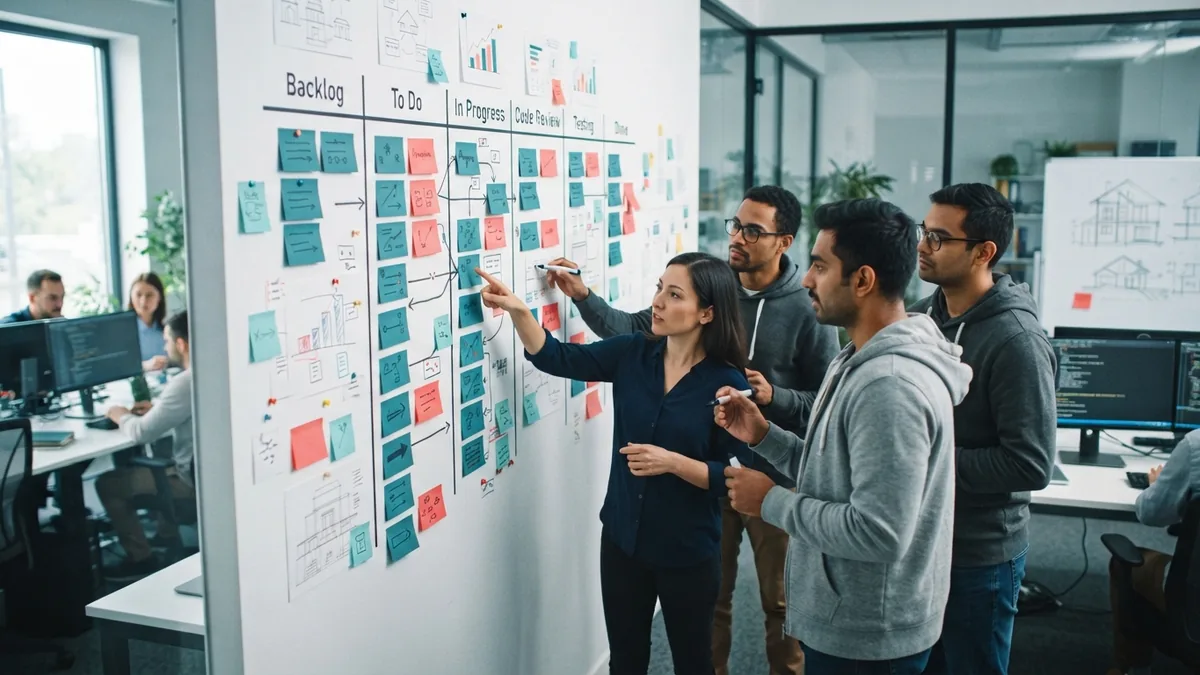
Kanban shows work on a board. Cards move through stages such as ready, build, test, and done. Work limits stop the team from starting too many tasks.
Lean principles seek to cut waste and speed up value. Extreme Programming, or XP, adds strong coding habits. These habits include pair work, test-first coding, and frequent integration.
Teams may blend these methods. For example, they can use Scrum for planning and Kanban limits for delivery. The method should serve the work.

How the Agile Development Process Works
How does agile development work from idea to release? The team moves through planning, building, checking, and learning. This agile development cycle repeats until the product meets its goal.
- Set the goal: Define the user problem, business aim, and success measure.
- Shape the backlog: Split the goal into small user stories. Order them by value, risk, and need.
- Plan the cycle: Pick work that fits the team's time and skill. Set a sprint goal when using Scrum.
- Build and test: Design, code, test, and review each item. Keep quality checks close to the work.
- Show the result: Demo working software to users, clients, or other staff.
- Learn and adjust: Review data and feedback. Improve the next cycle, backlog, or plan.
A typical sprint lasts one or two weeks. A team might spend day one on scope and design. It can then build and test a small feature before a review.
Each item needs a clear finish line. This may include code review, test checks, security checks, and release notes. A small item that users can try beats a task marked nearly done.
When is acceptance testing performed in agile development? It often runs during each story's test work. The team checks whether the result meets agreed user needs before it enters the done state.
Acceptance testing may also support a wider release check. The timing depends on the product and risk. It should not wait until the end if early checks can find costly faults.
Roadmaps, Roles, and Full Stack Work
What is a product roadmap in agile development? It is a broad view of likely goals and outcomes. It shows direction across coming months, not a fixed list of every task.
A roadmap can group work by themes, such as faster checkout or safer account access. It should show confidence and key risks. The backlog holds the detail that the team may change sooner.
Agile development projects need people with different skills. A product owner sets value and order. Engineers, designers, testers, and operations staff shape the best path together.
Fullstack development covers both the front end and the server side. Full stack development projects may include screens, APIs, data stores, and release tools. One engineer may span several layers, but shared review still protects quality.
Distributed agile development adds time zones and distance to the work. Teams need clear written goals, shared work boards, and set overlap hours. Short video calls help, but good handoffs matter more.

Benefits of Agile Development
Agile can speed up learning without cutting care. Teams test risky ideas before they spend months building them. Users see progress and can correct poor assumptions early.
What are two reasons agile development is more beneficial for uncertain work? First, small releases reduce the cost of change. Second, close teamwork finds gaps before they reach users.
- Faster response: Teams can change scope after new evidence.
- Better teamwork: Shared goals reduce handoffs and hidden work.
- Higher quality: Tests and reviews run throughout the cycle.
- Clearer progress: Working features show real movement.
- Lower risk: Small releases expose weak ideas sooner.
These gains need sound practice. A team cannot gain speed by skipping tests or piling up unfinished work. Fast feedback must lead to real changes.
Does agile development work? It can work well when leaders protect team focus. It also needs access to users, clear goals, and room for local decisions.

Challenges and Practical Ways to Improve
Agile development requires more than stand-up meetings. Teams need trust, useful measures, and a clear product aim. Without these basics, events become routine rather than helpful.
Resistance to change is a common barrier. Some groups fear lost control when plans stay open. Leaders can lower that fear by setting boundaries and showing results from small releases.
Team autonomy can also bring risk. A team may choose a quick fix that harms future work. Code review, shared design notes, and simple technical rules keep choices safe.
Distributed teams face added strain. Quiet members may miss key talks, and written notes may lag behind decisions. Record decisions in one shared place, then review them at the next cycle.
Use a few useful measures. Track lead time, escaped faults, release rate, and user outcomes. Do not reward busy boards or large task counts.
Agile development documentation should support action. Keep acceptance rules, system risks, key choices, and release steps easy to find. Drop records that no longer help a real decision.
The Future of Agile Development
Agile development is still a useful concept, but it is not a cure for poor product work. Teams may fail when they copy a framework without its purpose. They may also fail when speed becomes the only goal.
Is agile development a failing concept? No. Its feedback loop remains useful for work with unknown needs. The weak point is often poor leadership, weak user access, or a lack of technical care.
Rapid agile development should mean faster learning, not careless shipping. Automation can shorten build and test time. It cannot replace sound choices about users, risk, and quality.
Future teams will likely mix agile habits with stronger release controls. They will use data, automation, and clear roadmaps. The best approach will stay flexible while keeping its quality bar.
Start with a small goal and a short cycle. Give the team direct user feedback. Then improve the way of working after each review.