
Agile Project Management — How Teams Plan and Adapt
What Agile Project Management Means
Agile project management is an iterative way to plan and deliver work. Teams break a large project into small parts, release useful results often, and adjust plans as they learn. This helps teams respond to change without waiting for one final launch.
People asking “what is agile project methodology?” are often asking how this approach differs from a fixed plan. In a traditional plan, teams may set most needs and dates at the start. Agile still uses goals and plans, but it reviews them as new facts emerge. The team aims to deliver value early, then build on what works.
Agile is not one set method or tool. It is a way of working, with several frameworks that put its ideas into practice. Scrum is one well-known framework. Teams also use Kanban and other methods, or adapt their own process to fit the work.
- Plan work in short cycles instead of one long phase.
- Show working results and gather customer feedback often.
- Change the plan when new needs or risks arise.
For example, a team building a mobile app might first release sign-in and account setup. Users can test those features while the team plans the next set. This approach gives the team a chance to fix issues before they affect the whole product.
The Core Principles Behind Agile
Agile puts customer satisfaction first. Teams seek to deliver useful work early and keep delivering it at a steady pace. Each release should solve a real need, not just complete a task on a project plan.
Agile teams welcome changing requirements, even late in a project. A change can add work, so the team weighs its value against time and cost. The goal is not to accept every request. It is to make informed choices and keep the product useful.
Frequent delivery helps teams learn from real results. The Agile Manifesto's principles call for regular delivery of working software. They also stress close work between business teams and developers. These ideas apply beyond software when teams can share work in small, testable parts.
Continuous improvement is another key idea. At the end of a work cycle, the team can discuss what helped and what slowed progress. A small change, such as clearer task notes or earlier testing, may make the next cycle run better.
- Deliver useful work often and ask for feedback.
- Keep the team and its customers in close contact.
- Use working results to guide the next set of tasks.
- Review the way the team works and make steady changes.
How Scrum Puts Agile into Practice
Scrum is an Agile framework with set roles, events, and artifacts. It gives a team a shared way to plan work, check progress, and learn from each release. Scrum can suit work where needs may change and a team can deliver in small steps.
The Product Owner sets the product goal and orders the product backlog. That backlog is a ranked list of work the team may do. The Scrum Master helps the team use Scrum well and works to remove barriers. The developers build a usable result each sprint. The official Scrum Guide sets out these roles and the framework's core rules.
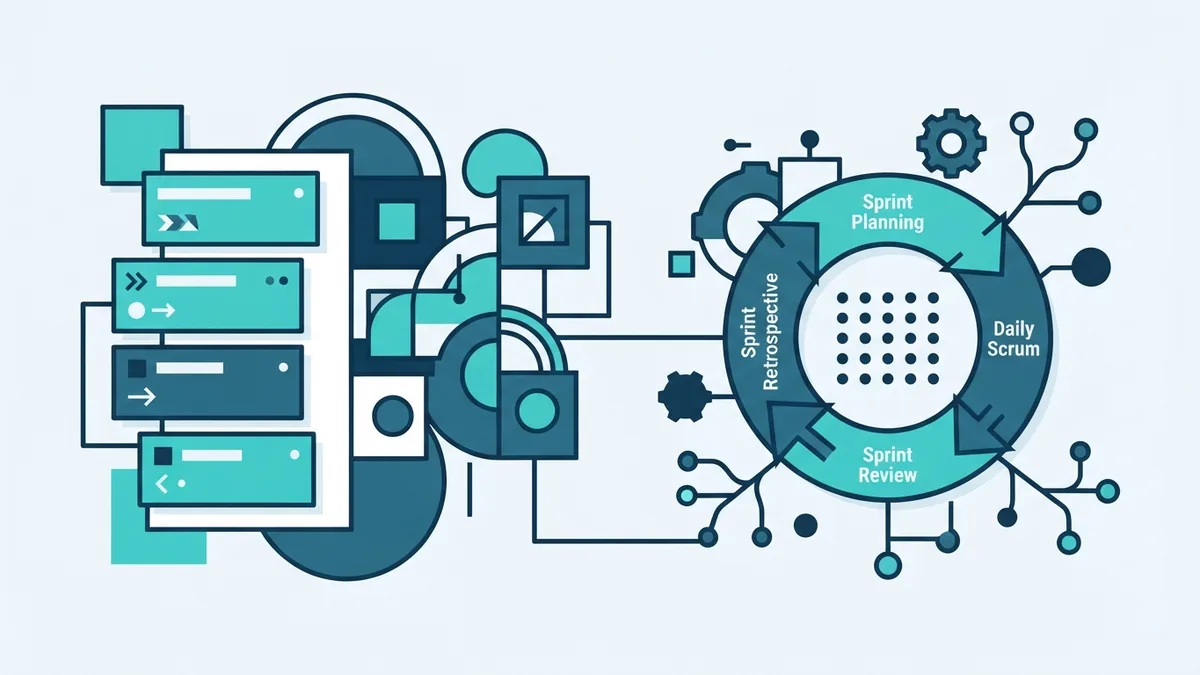
A sprint is a time-boxed work period, often one to four weeks. At sprint planning, the team picks work it can finish and sets a goal. The team then meets briefly each day to check progress and plan its next steps. At the end, it reviews the result with stakeholders and looks for ways to improve.
For a four-week app sprint, a team might aim to let users reset a password. It breaks that goal into design, build, and test tasks. The review checks whether the feature works for users. The team then uses what it learned to shape the next sprint.
- Roles: Product Owner, Scrum Master, and developers.
- Events: sprint planning, daily Scrum, sprint review, and sprint retrospective.
- Artifacts: product backlog, sprint backlog, and a usable product result.
Why Teams Choose Agile Project Management
Agile makes it easier to adapt when user needs, costs, or risks change. Since teams review work often, they can spot a poor fit before they build too much around it. This does not remove uncertainty. It gives the team more chances to respond.
Short cycles can also improve product quality. Teams can test small changes as they build, rather than leaving all testing until launch. A defect found in one feature is often easier to trace than a defect buried in a large release.
Frequent feedback can help teams build the right thing. A working feature gives users something clear to try, so their comments can be more useful than guesses made from a plan. Teams can use that feedback to reorder the backlog and focus on high-value work.
Team morale may improve when people have a clear goal and can shape how to reach it. Self-organizing teams take ownership of the work and share progress openly. Still, Agile does not promise faster delivery in every case. Results depend on team skill, steady feedback, and good access to users.
| Benefit | How it helps |
|---|---|
| Adaptability | The team can change its next steps as needs shift. |
| Quality | Regular tests and reviews catch issues earlier. |
| Team morale | Clear goals and shared ownership support better teamwork. |
| Customer fit | Feedback helps guide what the team builds next. |
How to Start Using Agile in a Project
Start with a clear product goal and a real customer need. Write down the outcome you want, such as fewer failed sign-ins or faster order checks. A goal gives the team a way to judge each task by the value it may bring.
Next, list the work in a product backlog. Keep each item small enough for the team to discuss, size, and test. Put the most valuable or time-sensitive items near the top. The Product Owner can update this order as new feedback comes in.
Choose a sprint length that lets the team finish useful work without rushing reviews. Many teams start with two weeks, then adjust after a few cycles. At planning, select a small set of tasks that supports one clear sprint goal. Avoid filling every hour, since bugs and new facts can change the work.
Use tools to make work and blockers easy to see. A simple board can show tasks as “to do,” “in progress,” and “done.” Teams with several linked work streams may need tools for backlog ordering, test tracking, and release planning. Tools help the method; they do not replace good talks or clear choices.
- Set a product goal tied to a user need.
- Build and rank a backlog of small work items.
- Pick a short sprint length and agree on one sprint goal.
- Review working results, gather feedback, and improve the team process.
For mobile application development, a team might release one small feature to a test group first. It can check crashes, user reports, and task completion before a wider release. That evidence helps guide the next sprint and lowers the chance of shipping a poor fit.
Common Agile Challenges and Ways to Handle Them
Agile can struggle when leaders expect a fixed scope, date, and cost while also asking for ongoing change. Teams should state what is fixed and what can move. For example, a launch date may stay fixed while the team adjusts which lower-value features make the first release.
Weak product ownership can leave teams unsure what matters most. A backlog with vague or equal-ranked tasks makes sprint planning slow. Give one person the duty to set order, explain user needs, and make timely choices.
Too many meetings can make Agile feel like admin work. Keep each event focused on its purpose and end with clear next steps. A daily check should surface blockers, not become a long status report to a manager.
Teams can also mistake speed for progress. If people skip tests or carry unfinished work from sprint to sprint, quality and trust fall. Set a clear finish standard for each task, and review progress through working results. Agile works best when teams can speak openly, learn from setbacks, and change their habits.
In short, what is Agile project management with Scrum? It is the use of Agile ideas through Scrum's roles, events, and artifacts. The best framework is the one that helps a team deliver useful work, learn from users, and respond to change without losing focus.