
Build Better Products with Agile Methodology
Understanding Agile Methodology
Agile methodology development builds software in small, tested parts. Teams work through short cycles, gather feedback, and adjust the plan. This approach values useful progress over fixed plans that cannot change.
Agile development suits web platforms, gateway integrations, and automation systems. A team may release a payment flow before it builds every account feature. Users then test the flow and guide the next round of work.
The Agile methodology process starts with a shared product goal. The team breaks that goal into user stories, tests each small release, and learns from results. This cycle keeps work close to real user needs.
Agile is a methodology because it offers guiding values and habits. It is not one strict process. Scrum, Kanban, and Lean apply those ideas in different ways.
Core Values That Shape Agile Work
The Agile Manifesto sets four key preferences for software teams. It values people and teamwork over rigid tools. It also values working software over large sets of documents.
It favours customer partnership over contract debate. It also favours change over following an old plan. The Agile Manifesto states these values in the original source.
- People and their teamwork come before strict processes.
- Working software comes before extensive documentation.
- Customer collaboration comes before contract arguments.
- Response to change comes before fixed plan control.
These values do not make plans or documents useless. Teams still need architecture notes, test records, and release plans. Agile asks teams to keep those items useful and small.
Agile Phases and the Development Life Cycle
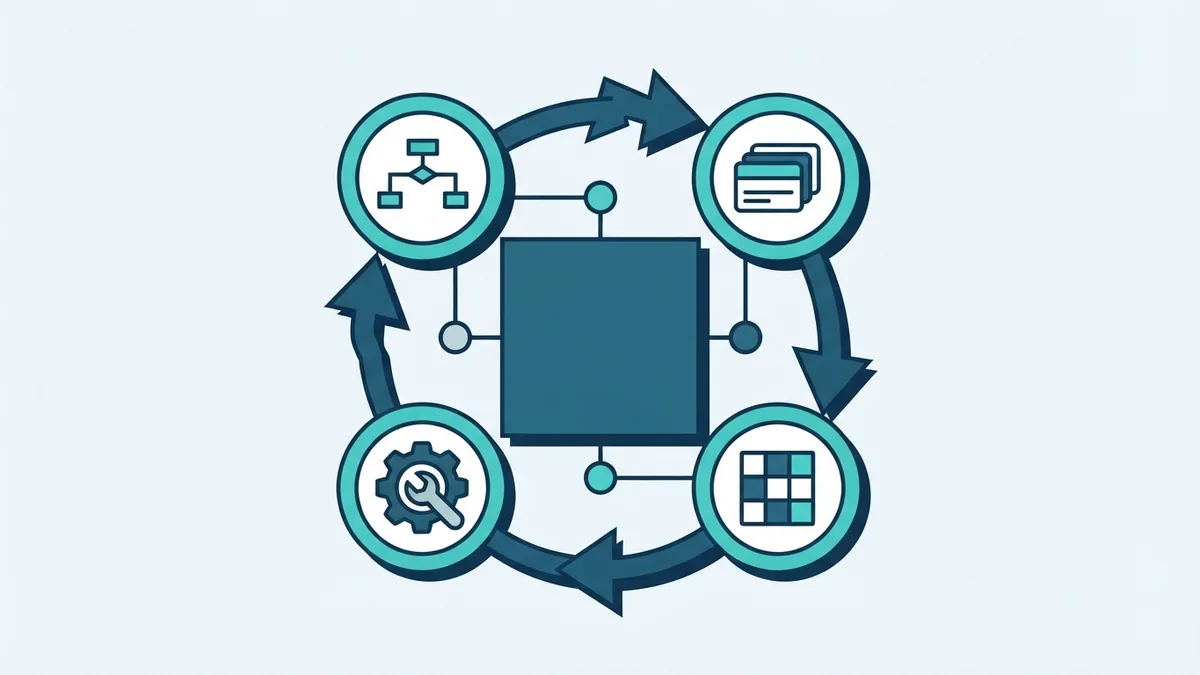
The Agile methodology life cycle repeats several linked stages. Teams may name them differently, but the work stays much the same. Each cycle creates a tested increment that can deliver value.
First, the team gathers needs and sets a product goal. Next, it ranks work in a product backlog. The team then plans a short iteration, builds the chosen items, tests them, and reviews the result.
- Discovery: Learn about users, risks, goals, and business needs.
- Backlog building: Turn needs into clear user stories and tasks.
- Planning: Choose work that fits the next cycle.
- Build and test: Create working software and check it often.
- Review: Show the result to stakeholders and gather feedback.
- Improve: Change the work plan and team habits for the next cycle.
Some teams call this flow the Agile methodology cycle or Agile methodology stages. The names matter less than the feedback loop. A cycle should end with tested work and a clear next step.
Agile does not remove requirements gathering. It changes when and how teams gather requirements. Teams refine needs as they learn more from users, tests, and market results.
Agile Teams and Key Roles
Agile teams are cross-functional. They bring together skills such as design, coding, testing, data, and operations. This mix reduces handoffs and helps the team solve issues early.
Stakeholders also take part in the work. They explain goals, review progress, and answer open questions. Their input helps the team avoid building a feature that looks complete but solves the wrong problem.
The product owner
The product owner sets the product direction. They rank the product backlog by user value, risk, and need. They also clarify user stories and accept completed work.
The scrum master
The scrum master helps the team follow Scrum well. They remove blockers, guide team events, and protect the team from harmful distractions. They also help the team improve its way of working.
Developers, testers, and designers share responsibility for delivery. A role title should not create a wall between these skills. The team owns the outcome together.
How Sprint Planning Works in Agile
Agile methodology sprint planning sets the goal for one short work cycle. A sprint often lasts one to four weeks. Many teams choose two weeks because that period gives fast feedback without creating daily planning work.
The product owner brings the highest-value backlog items. The team checks each item for scope, risk, and clear acceptance rules. It then chooses work that fits its past pace and available time.
- Review the product goal and the highest-ranked backlog items.
- Ask questions about value, design, data, and test needs.
- Set one sprint goal that gives the work a clear purpose.
- Break each story into small tasks with visible owners.
- Check the plan against team capacity and known risks.
- Start the sprint with a shared view of done work.
A useful Agile project plan stays clear but flexible. It may show goals for the next sprint and broad themes for later work. It should not pretend that distant details are known.
During a sprint, the team holds short check-ins and tracks blocked work. At the end, it reviews the increment with stakeholders. A team then holds a retrospective and chooses one or two improvements.
Benefits of Agile Methodology
Agile can shorten the path from idea to useful software. Teams deliver small pieces instead of waiting for one large launch. Users can test those pieces before the team invests in later features.
This approach can also lower delivery risk. Small changes are easier to test and trace. A defect found in one story is less likely to affect an entire release.
- Faster feedback: Users see progress during development.
- Better focus: Teams work on a small set of high-value items.
- Lower risk: Tests and reviews happen throughout the cycle.
- Clearer progress: Working features show real delivery.
- Stronger teamwork: Shared work reduces long handoffs.
- Better change control: New learning can shape the next cycle.
Agile does have limits. It needs active stakeholders, clear goals, and a team with enough skill to make decisions. Without those conditions, frequent change can create churn instead of progress.
Agile also needs discipline around quality. Teams should keep tests, security checks, and release controls in the flow. Working software means software that is safe, useful, and ready for its stated purpose.
Common Agile Frameworks
Scrum uses set roles, events, and time-boxed sprints. It works well when a team needs a regular review rhythm. Scrum also gives teams a clear backlog and a shared definition of done.
Kanban uses a visual flow of work. Teams set limits on work in progress and aim to keep items moving. Kanban fits support teams and product teams that receive work at uneven times.
Lean focuses on customer value and waste reduction. Teams remove steps that add delay without adding value. Lean ideas often support faster flow, better quality, and continuous improvement.
| Framework | Main practice | Useful fit |
|---|---|---|
| Scrum | Short sprints with set team events | Product work with a clear backlog |
| Kanban | Visual flow and work limits | Support work and changing priorities |
| Lean | Remove waste and improve flow | Teams seeking faster, simpler delivery |
These frameworks share the same broad aim: deliver value, learn quickly, and improve the system. Teams may combine practices when the reason is clear. They should avoid copying ceremonies without understanding the problem each practice solves.
Putting Agile Into Practice
Start with one product goal and a small cross-functional team. Define what success means in terms users can feel or measure. Then write a short backlog of stories that support that goal.
Choose a cycle length, set a sprint goal, and agree on what done means. Keep review sessions focused on working software. Use the feedback to rank the next items.
Measure outcomes rather than activity alone. Useful measures include cycle time, escaped defects, release frequency, and user task success. These signals show whether Agile is improving delivery.
The best Agile methodology steps create a steady learning loop. Plan enough to start well, build in small parts, and check the result often. Then change the plan when evidence shows a better path.