
Adaptive Software Development: How the Cycle Works
What Is Adaptive Software Development?
What is adaptive software development? It is a way to build software when needs may change. Teams plan in short cycles, build a useful part, and learn from each result.
Adaptive software development focuses on changing requirements and shifting work conditions. It does not treat the first plan as fixed. Instead, teams adjust scope, design, and priorities as new facts appear.
The adaptive software development methodology grew from agile software development and Rapid Application Development (RAD). It suits web platforms, gateway integrations, and automation systems. These projects often face new risks during the build.
ASD is not a reason to skip planning. It uses mission-driven planning with room to change. The team still sets goals, tracks risk, and checks each release.
History and Roots of Adaptive Software Development
Adaptive Software Development emerged from work on RAD during the 1990s. RAD placed less weight on long plans and more weight on fast builds. It used prototypes, user input, and short delivery cycles.
Jim Highsmith helped shape ASD for complex software work. He argued that teams should accept change rather than fight it. This view helped place ASD within the wider agile movement.
Agile development in software engineering shares this focus on feedback and small releases. Agile software development in software engineering is a broad family of methods. ASD is one approach within that wider family.
ASD also differs from ad hoc development in software engineering. Ad hoc work lacks a clear cycle, goal, or review point. ASD welcomes change, but it still uses a repeatable way to learn.
Core Principles and Characteristics
ASD rests on three linked ideas: speculate, collaborate, and learn. These ideas guide the whole project. They help teams act when they lack full knowledge.
Speculate with a useful plan
Speculation means making a plan with the facts available now. The team sets a mission, lists likely features, and marks key risks. It accepts that later facts may change the plan.
Development requirements in software engineering often change after user tests. Requirement development in software engineering is not a one-time task. Teams refine each requirement as they learn more.
Collaborate across roles
ASD brings developers, testers, designers, analysts, and users into one work cycle. Each role adds a useful view of the problem. This cuts delays caused by handoffs.
Component based development in software engineering can support this work. Teams build and test small parts with clear boundaries. They can then replace or improve one part without changing the whole system.
Learn from each cycle
Learning comes from tests, demos, user talks, and live data. The team turns each finding into a change for the next cycle. This makes iterative development central to ASD.
Testing should run throughout the build. Test first development in software engineering places checks before or beside code work. It can expose unclear needs before they grow into costly faults.
The Phases of the Adaptive Software Development Lifecycle
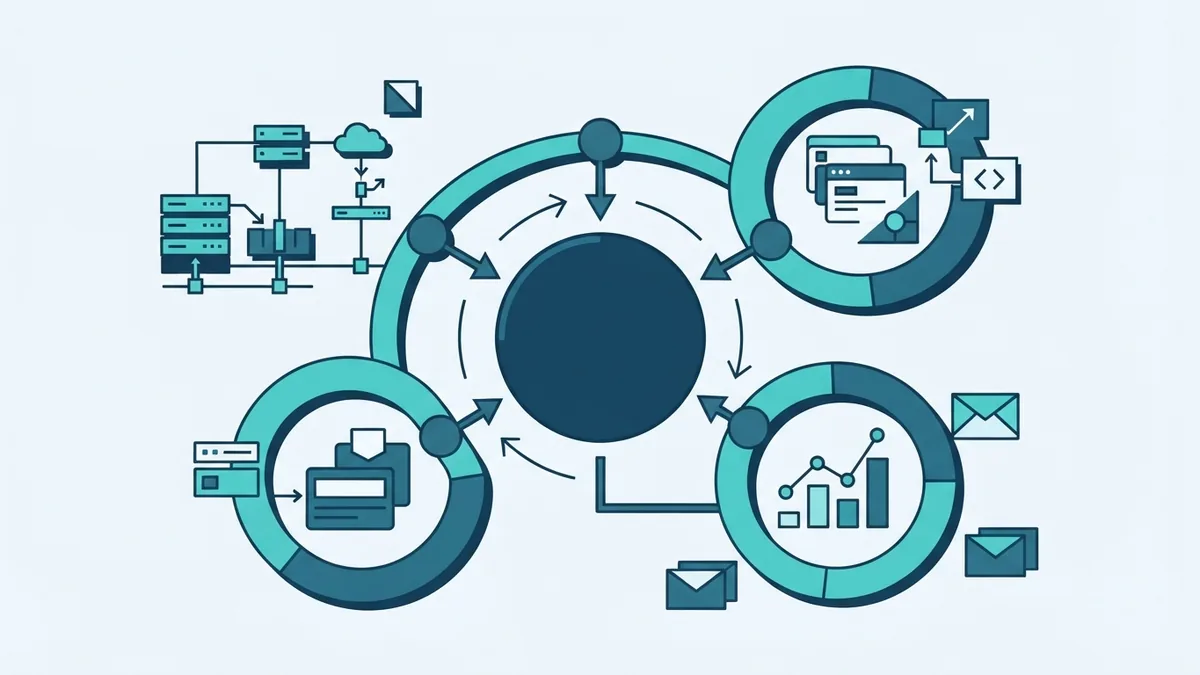
The phases of adaptive software development are speculate, collaborate, and learn. They repeat throughout the project. They are not strict steps that happen only once.
1. Speculate
The team starts with a broad mission and a short release plan. It breaks the mission into small features. It also ranks risks by impact and uncertainty.
A useful plan may cover six weeks. It gives detail only for the next cycle. This keeps direction without creating false certainty.
2. Collaborate
The team builds and checks features during each cycle. Members share work often and solve issues together. Continuous integration joins code changes into a shared build.
Each cycle should produce something that can be shown or tested. It might be a working API, a payment rule, or a secure sign-in flow. Small outputs make feedback faster.
3. Learn
The team reviews its output with users and project sponsors. It asks what worked, what failed, and what changed. It then updates the next cycle plan.
Learning also includes a team review. Members look at slow tasks, missed risks, and weak tests. A short review can stop the same issue from spreading.
Advantages of Adaptive Software Development
The advantages of adaptive software development come from short feedback loops. Teams can change course before months of work support the wrong feature. They can also show useful progress at regular points.
- Faster time to market: Small releases can reach users sooner.
- Better collaboration: Shared work reduces gaps between roles.
- Higher customer satisfaction: User feedback shapes each new cycle.
- Earlier risk control: Tests and reviews expose faults sooner.
- Better fit: The product can follow real user needs.
Software quality assurance in software engineering supports these gains. What is quality assurance in software development? It is the planned work used to prevent faults and check quality.
Software quality assurance and test engineering are related, but they are not identical. Assurance covers the way teams work. Test engineering checks whether the product behaves as expected.
Challenges and Limits of Adaptive Software Development
The challenges of adaptive software development begin with uncertainty. Some sponsors may want a fixed scope and firm dates. They may see a changing plan as weak control.
Teams also need strong decision rules. Without them, priorities can change too often. This can raise development costs and leave important work unfinished.
Documentation can be hard when designs change often. ASD does not mean no documentation. Teams should keep short records for key decisions, risks, interfaces, and support needs.
- Resistance to change: Some groups prefer fixed plans.
- Scope drift: New ideas can crowd out vital work.
- Cost pressure: Frequent changes may increase build time.
- Weak records: Fast cycles can leave gaps in system knowledge.
- Team demands: ASD needs skilled, available team members.
Refactoring in software engineering can also affect cost. Refactoring means improving code structure without changing its result. What is refactoring in software development? It is careful code cleanup that lowers future change risk.
Evolutionary development in software engineering uses a product that grows through learning. Incremental development in software engineering adds usable parts over time. Both ideas fit ASD, but neither removes the need for clear goals.
How ASD Compares With Other Software Approaches
Is software development the same as software engineering? No. Software development focuses on creating and changing software. Software engineering also covers design rules, risk, testing, maintenance, and system quality.
Is software development and software engineering the same? The terms overlap in daily work. Engineering usually suggests a wider view of reliability, scale, and long-term support.
RUP software development uses a structured process with set roles and work products. RUP in software engineering can suit large teams with formal controls. ASD gives teams more freedom to reshape plans during short cycles.
Rapid software development in software engineering often values speed and early prototypes. Adaptive software development adds a strong learning loop. The best choice depends on risk, team skill, system size, and change rate.
Best Practices for Implementing ASD
Start with a clear mission and a small first cycle. Define the user problem in plain terms. Set a success measure that the team can check.
Keep the team cross-functional and close to users. Review working output at the end of every cycle. Use the review to change priorities, not just to report progress.
Build testing into daily work. Automate repeat checks where the cost makes sense. Pair those checks with manual tests for access needs and real user journeys.
- Set the mission: Name the user outcome and key business goal.
- Map the risks: Test the hardest unknowns early.
- Plan one short cycle: Choose work that can produce a useful result.
- Build and test together: Share progress and check quality each day.
- Review with users: Gather clear feedback on the working result.
- Update the plan: Keep, change, or drop work based on evidence.
Use ASD when change is likely and learning has real value. Choose stronger controls when safety, law, or fixed contracts limit change. Good engineering matches the method to the work.